Questo sito non utilizza cookie di profilazione, ma solo cookie tecnici ai fini del corretto funzionamento delle pagine. Per maggiori informazioni consulta l'informativa sul trattamento dei dati personali per gli utenti del sito internet
Abstract: The Mysteries of Udolpho, by Ann Radcliffe, appeared in four volumes on 8 May 1794 from G. G. and J. Robinson of London. Her fourth and most popular novel, The Mysteries of Udolpho tells of Emily St. Aubert, who suffers misadventures that include the death of her mother and father, supernatural terrors in a gloomy castle, and machinations of an Italian brigand. Often cited as the archetypal Gothic novel, The Mysteries of Udolpho appears prominently in Jane Austen's 1817 novel Northanger Abbey, where an impressionable young woman reader comes to see friends and acquaintances as Gothic villains and victims, with amusing results.Ann Radcliffe (née Ward; 9 July 1764 – 7 February 1823) was an English author and a pioneer of Gothic fiction. Her technique of explaining apparently supernatural elements in her novels has been credited with gaining Gothic fiction respectability in the 1790s. Radcliffe was the most popular writer of her day and almost universally admired; contemporary critics called her the mighty enchantress and the Shakespeare of romance-writers, and her popularity continued through the 19th century.Interest has revived in the early 21st century, with the publication of three biographies.
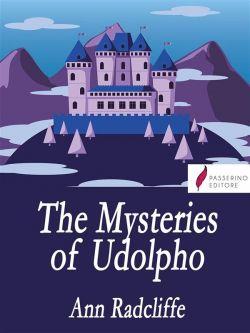
Titolo e contributi: The Mysteries of Udolpho
Pubblicazione: Passerino
The Mysteries of Udolpho, by Ann Radcliffe, appeared in four volumes on 8 May 1794 from G. G. and J. Robinson of London. Her fourth and most popular novel, The Mysteries of Udolpho tells of Emily St. Aubert, who suffers misadventures that include the death of her mother and father, supernatural terrors in a gloomy castle, and machinations of an Italian brigand. Often cited as the archetypal Gothic novel, The Mysteries of Udolpho appears prominently in Jane Austen's 1817 novel Northanger Abbey, where an impressionable young woman reader comes to see friends and acquaintances as Gothic villains and victims, with amusing results.Ann Radcliffe (née Ward; 9 July 1764 – 7 February 1823) was an English author and a pioneer of Gothic fiction. Her technique of explaining apparently supernatural elements in her novels has been credited with gaining Gothic fiction respectability in the 1790s. Radcliffe was the most popular writer of her day and almost universally admired; contemporary critics called her the mighty enchantress and the Shakespeare of romance-writers, and her popularity continued through the 19th century.Interest has revived in the early 21st century, with the publication of three biographies.
Ultime recensioni inserite
Nessuna recensione
Clicca sulla mappa dove vuoi posizionare il tag